Gateways at a glance
Ehime has no Shinkansen station, which is one reason it stays uncrowded — but it is not hard to reach. Most overseas visitors arrive one of three ways: a domestic flight to Matsuyama Airport, a JR limited express from Okayama after a Shinkansen ride, or a ferry from Hiroshima. Cyclists arrive under their own power over the Shimanami Kaido. The table summarises the main routes to Matsuyama; each destination has its own detailed access page.
| From | Best way | Time | Good to know |
|---|---|---|---|
| Tokyo | Flight from Haneda | About 1 h 30 min | Train via Okayama takes around 6 h |
| Osaka / Kyoto | Shinkansen + Shiokaze | 3 h 30 min – 4 h | Or 50-minute flight from Itami; highway bus 5–6 h |
| Okayama | Shiokaze limited express | About 2 h 40 min | Roughly hourly; crosses the Great Seto Bridge |
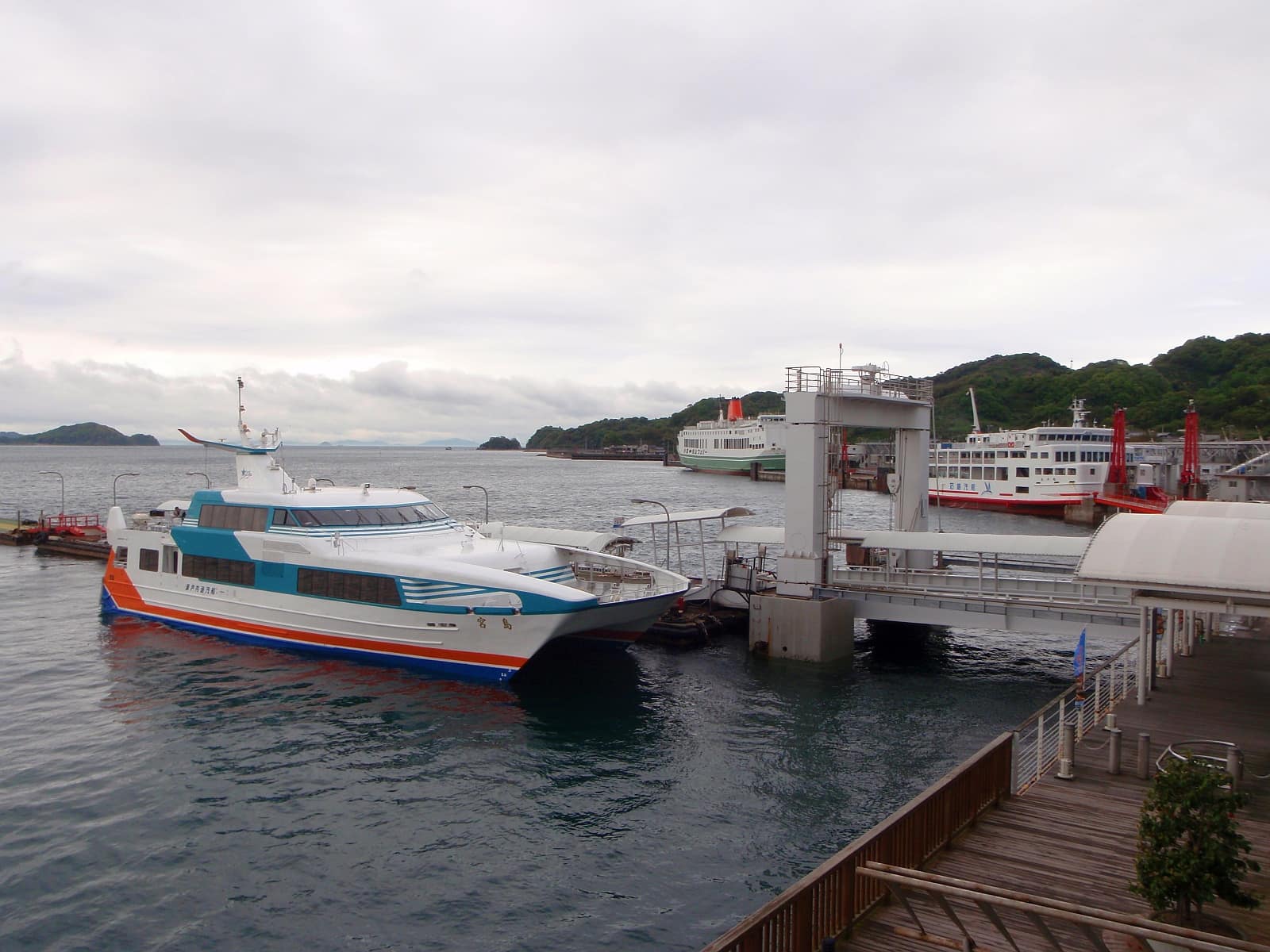
| Hiroshima | Super Jet / cruise ferry | 70–80 min / 2 h 40 min | The most scenic approach |
| Takamatsu | Ishizuchi limited express | About 2 h 30 min | Covered by the All Shikoku Rail Pass |
| Beppu (Kyushu) | Ferry to Yawatahama + train | About 4 h | Good link with Kyushu itineraries |
| Fukuoka | Flight | About 50 min | Or Shinkansen to Hiroshima and ferry |
| Taipei / Seoul / Busan | Direct flight when operating | 1 h 30 min – 2 h 30 min | Seasonal — verify current schedules |
By air
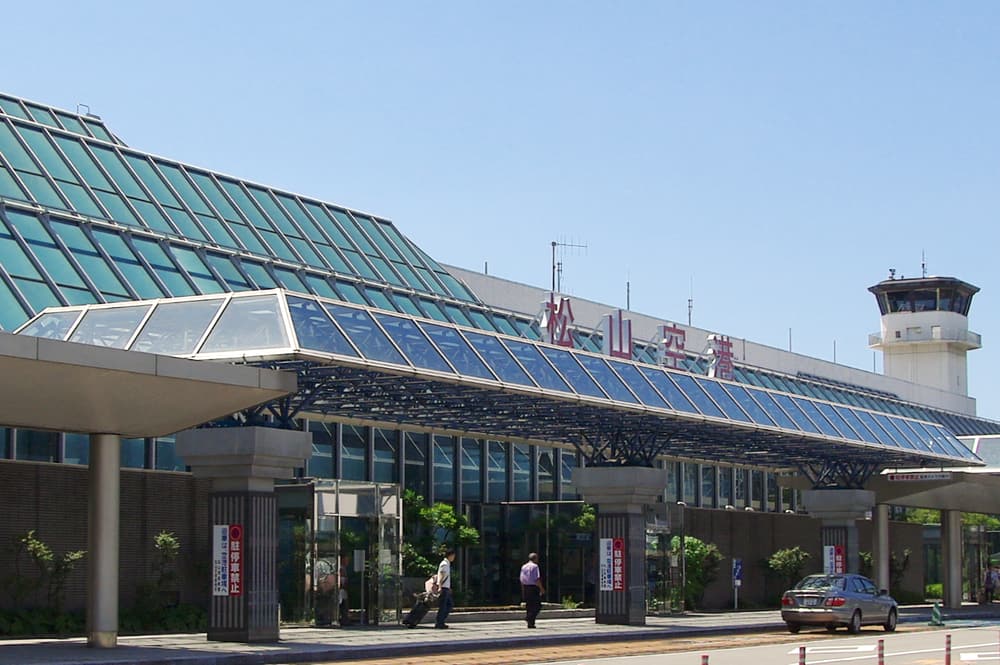
Matsuyama Airport (MYJ) is the prefecture’s only commercial airport and one of the most convenient in Japan, just 15–25 minutes by limousine bus from the city centre. Domestic services run from Tokyo Haneda (frequent, about 1 hour 30 minutes), Tokyo Narita, Osaka Itami, Nagoya, Fukuoka, Kagoshima and Okinawa, operated by the major airlines and low-cost carriers.
International flights: in recent years Matsuyama has had direct services from Taipei, Seoul and Busan, and at times other Asian cities. These schedules are seasonal and change often — some routes have been suspended and restarted more than once — so always confirm with the airline before building a trip around them. The reliable alternatives are to fly into Tokyo, Osaka (Kansai), Fukuoka or Hiroshima and connect.
By train
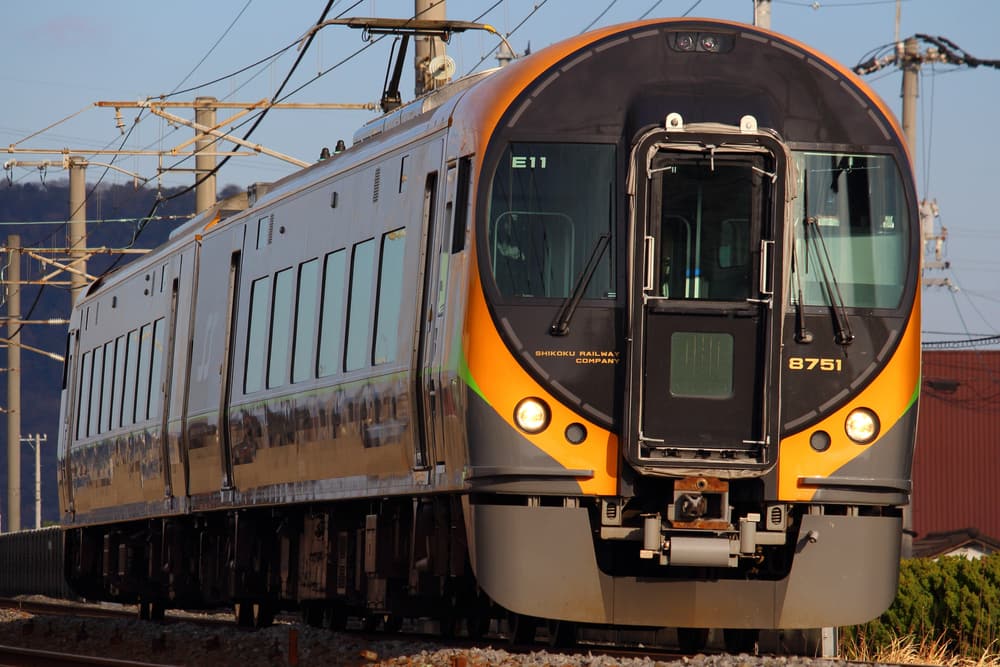
From anywhere on the Tokaido–Sanyo Shinkansen, change at Okayama for the Shiokaze limited express. It crosses the Great Seto Bridge and runs along Ehime’s north coast through Niihama, Saijo and Imabari to Matsuyama, roughly once an hour, in about 2 hours 40 minutes. From Takamatsu, the Ishizuchi limited express covers the same line. South of Matsuyama, the Uwakai limited express continues to Uchiko, Ozu and Uwajima.
Rough through times to Matsuyama: about 3 hours 30 minutes from Hiroshima via Okayama, 3 hours 30 minutes to 4 hours from Osaka or Kyoto, and around 6 hours from Tokyo. Seats can be reserved, and all these trains are covered by the Japan Rail Pass.
By ferry
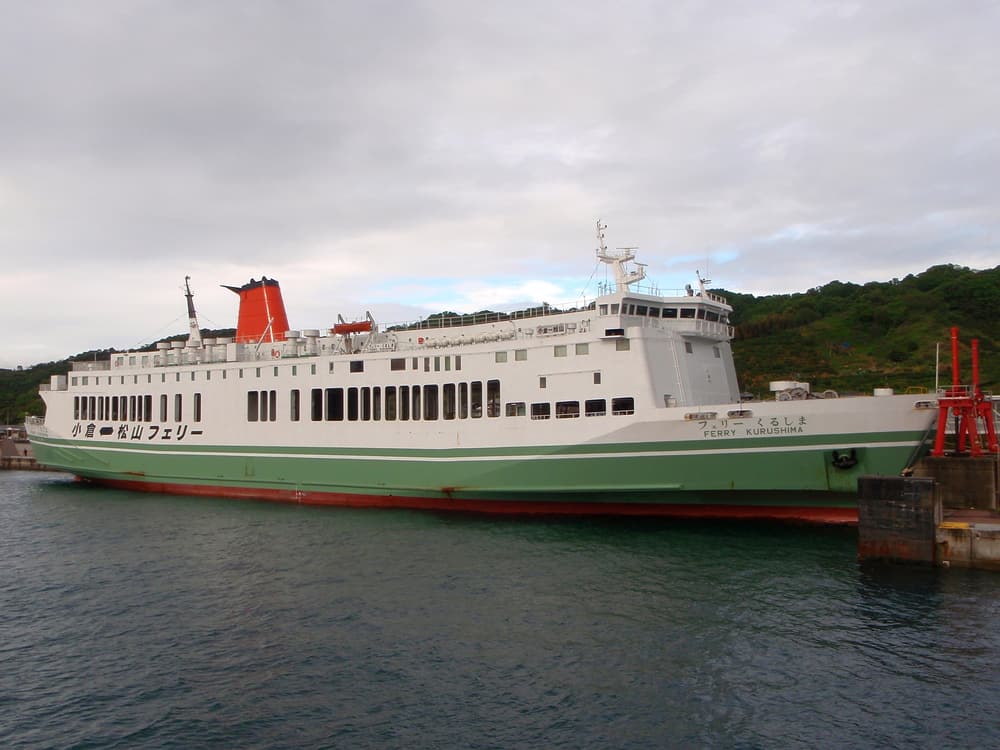
- Hiroshima / Kure – Matsuyama: the classic crossing. The Super Jet hydrofoil takes 70–80 minutes; the cruise ferry takes about 2 hours 40 minutes and is a fine mini-voyage through the islands. Both sail several times a day to Matsuyama Kanko Port.
- Beppu / Usuki (Kyushu) – Yawatahama: car ferries cross the Bungo Channel in about 2 hours 30 minutes to 3 hours, landing an hour south of Matsuyama by train — ideal for linking Ehime with Beppu’s hot springs. A shorter crossing runs from Saganoseki to Misaki at the tip of the Sadamisaki Peninsula.
- Osaka – Toyo: an overnight ferry sails from Osaka’s Nanko port to Toyo port in Saijo.
- Yanai (Yamaguchi) – Matsuyama: a car ferry via the islands of the Suo-Oshima area, about 2 hours 30 minutes.
Routes, fares and timetables are revised regularly, and a few long-standing services have closed in recent years, so check each operator’s current schedule.
By bus over the Shimanami Kaido
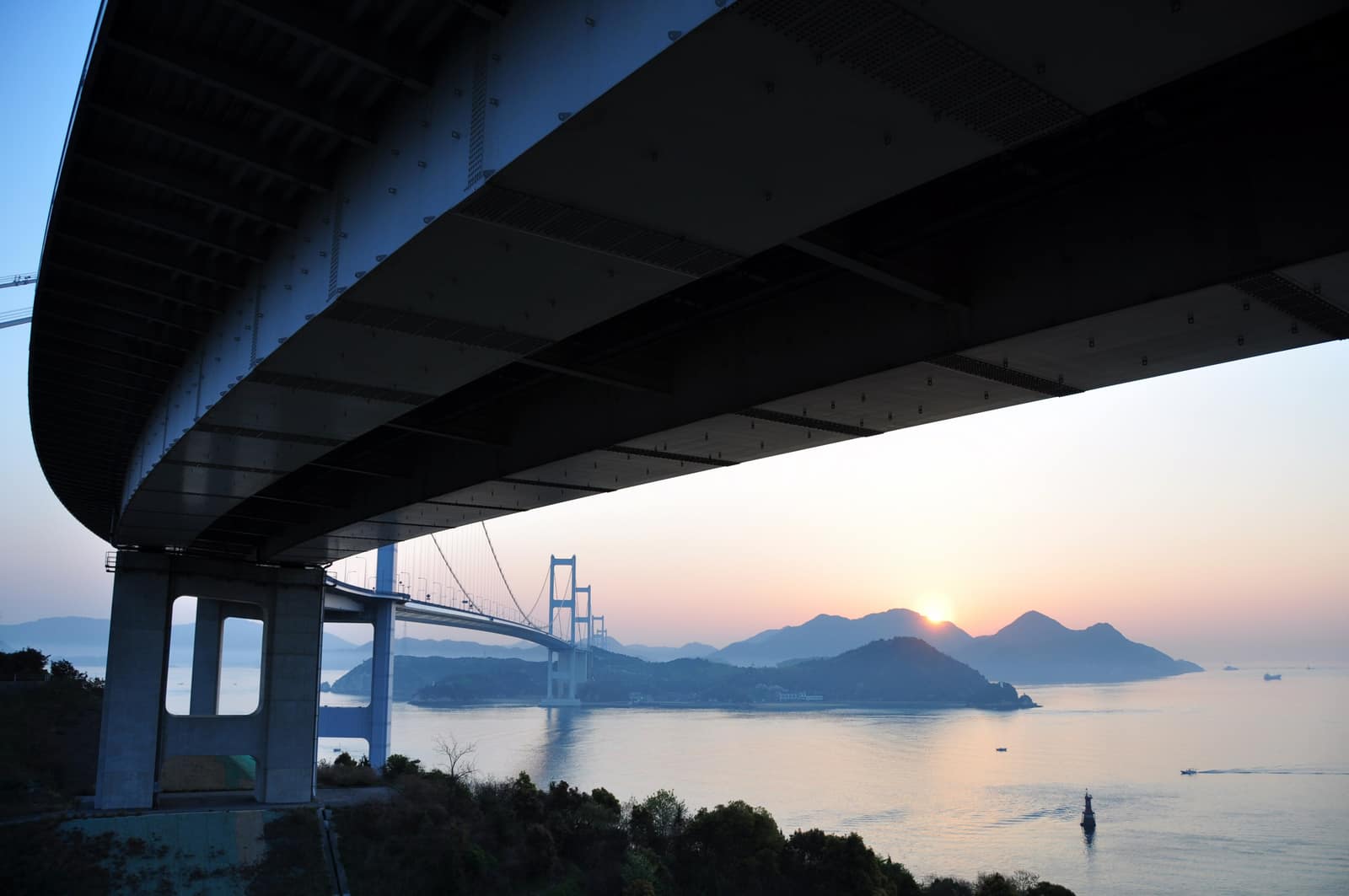
Highway buses use the Shimanami Kaido expressway between Hiroshima Prefecture and Imabari: from Fukuyama (a Shinkansen stop) in about 1 hour 30 minutes, and from Hiroshima in under 3 hours, with some services continuing to Matsuyama. From Onomichi there are buses to the nearer islands with a change for Imabari. Long-distance day and night buses also link Matsuyama with Osaka, Kobe, Kyoto, Nagoya, Tokyo, Takamatsu, Kochi and Tokushima — slower than the train but cheaper.
Getting around by train
The JR Yosan Line is the spine of the prefecture, following the coast from the Kagawa border through Niihama, Saijo and Imabari to Matsuyama, then on to Uchiko, Ozu and Uwajima. Limited expresses run roughly hourly on the whole route; local trains are much less frequent outside the Matsuyama area. South of the city the line splits into a fast inland route via Uchiko and a slow coastal route via Shimonada, rejoining at Ozu. From Uwajima, the rural Yodo Line heads east into Kochi.
Around Matsuyama, the private Iyotetsu network runs the city trams plus three suburban lines. Note that IC cards cannot be used on JR trains in Ehime — buy paper tickets or use a pass.
Rail passes
The All Shikoku Rail Pass (sold for 3, 4, 5 or 7 consecutive days to visitors on a temporary-visitor visa) gives unlimited travel on all JR Shikoku trains, including unreserved seats on limited expresses, and on the island’s private railways — in Ehime that means Iyotetsu trains and trams. It pays for itself with a Takamatsu–Matsuyama–Uwajima run. The nationwide Japan Rail Pass covers the JR lines too, plus the Shinkansen connection from Honshu. Regional JR West passes that include “Setouchi” in the name cover the approach via Okayama and, in some versions, ferries to Matsuyama — compare the current terms.
By bus, car and bicycle
Buses fill the gaps: Iyotetsu buses around Matsuyama and to Tobe, JR Shikoku buses to Kuma Kogen, Setouchi buses around Imabari, Saijo and Niihama, and Uwajima buses in the far south. Rural services are sparse — a few a day — so check return times.
Car hire is worthwhile for the highlands, the Sadamisaki Peninsula and the southern coast. Offices cluster at Matsuyama Airport and the main JR stations. You need an International Driving Permit issued under the 1949 Geneva Convention (or an official Japanese translation for licences from certain countries), driving is on the left, and expressways are tolled. Mountain roads are narrow; some close in winter.
Cycling is a means of transport here, not just a sport: beyond the Shimanami Kaido, signed blue-line routes run around the prefecture, and rental bikes are available in most towns.
Frequently asked questions
Is there a Shinkansen to Matsuyama?
No. The nearest Shinkansen station is Okayama, from where the Shiokaze limited express runs directly to Matsuyama in about 2 hours 40 minutes.
What is the fastest way from Tokyo to Ehime?
Flying. Haneda to Matsuyama takes about 1 hour 30 minutes, and the airport is 15–25 minutes from the city centre.
Is the All Shikoku Rail Pass worth it for Ehime alone?
Usually only if you also travel to or from Takamatsu, Kochi or Tokushima. For day trips from Matsuyama alone, ordinary tickets may be cheaper; add up your journeys first.
Can I use Suica or ICOCA in Ehime?
Not on JR trains within Ehime. Matsuyama’s trams and buses have their own card and have been introducing nationwide cards; carry some cash to be safe.
Are there direct international flights to Matsuyama?
There have been direct flights from Taipei, Seoul and Busan in recent years, but they are seasonal and subject to change. Check current airline schedules.